About
I like turning a problem into a thing you can use.
Sometimes the thing is a model, sometimes a machine, sometimes a programme that other people run. The problem is usually one nobody in the room was going to solve otherwise.
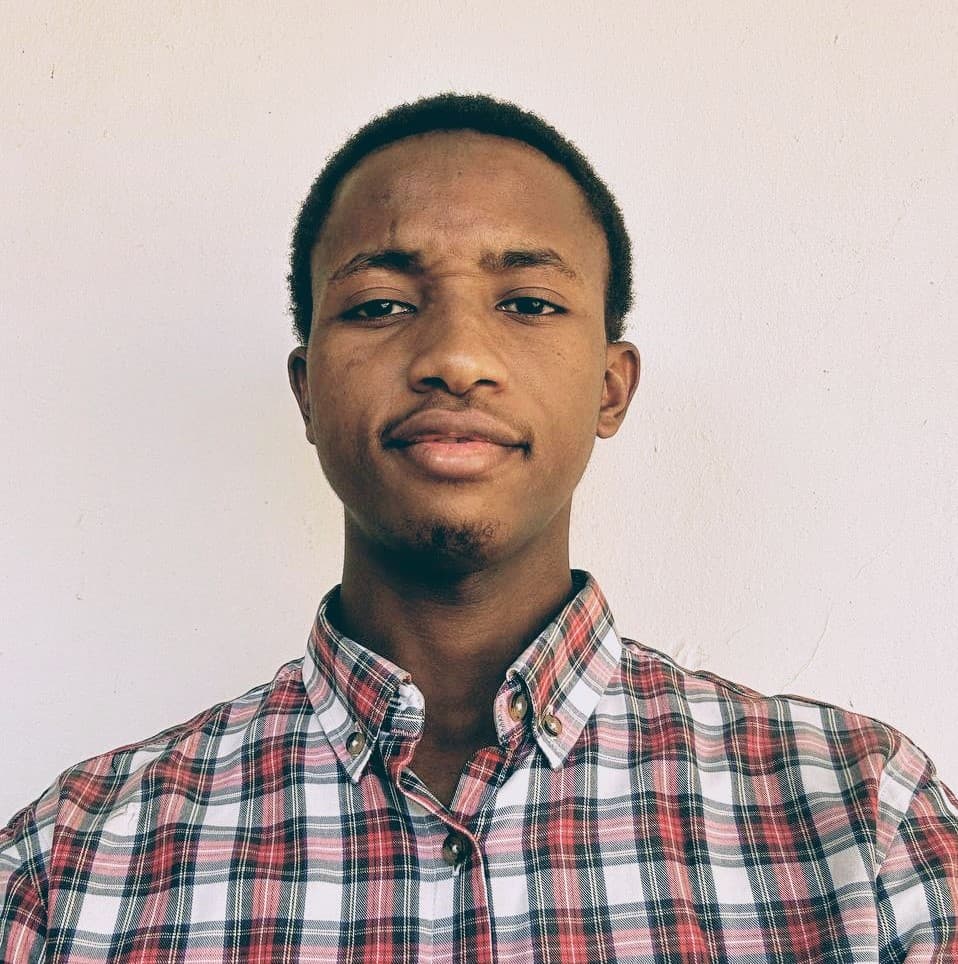
I study Electrical & Electronics Engineering at Usmanu Danfodiyo University in Sokoto, Nigeria, on a First Class average. Before that I finished top of my class at Umaru Ali Shinkafi Polytechnic and posted the second-best IJMB A-level result in the country. I mention the grades once, here, because they bought me the freedom to spend my time on everything below.
I build from a long way outside the usual startup hubs, and I have come to see that as useful rather than limiting. The problems around me are concrete, the constraints are real, and anything that works here has already survived a harder test than most demos. The work itself is not tied to a place. I will go wherever the problem is.
Engineering
My day job is AI/ML engineering at GrandGale Technologies, where I lead machine learning across two production platforms: demand forecasting and routing models, NLP matching pipelines, and the fifty-odd FastAPI endpoints that hold them together. Before that I was a product manager on the same team, and before that a software engineering intern at Mently shipping Python backends around predictive models. Product first, then engineering, turned out to be a useful order.
The projects I build on my own time are where I go to be thorough. A credit-risk system whose first model scored a perfect 1.0 and had to be thrown away, and now scores an honest 0.82 with the tests to keep it that way. A Nigerian tax assistant that does its arithmetic in plain Python and only lets the language model read. A photonic neural network simulated from the physics up. I care about calibration, about what a system refuses to do, and about writing down why.
Innovation under constraint is not a slogan here. It is the operating environment.
Building
AquaVolt is the project that taught me hardware makes you honest. It is a solar-powered water purification system for communities where clean water and reliable electricity are missing at the same time. We took it from an idea to Nigeria's government-backed iHatch incubator, from 500-plus applicants to a national top 10, and then to a stand at GITEX Nigeria 2025 in Lagos, one of the few teams there from the northwest.
Sahara Deliveries, which I co-founded, is a last-mile logistics venture at MVP and in pilot across Northern Nigeria. It exists because the infrastructure gaps in the Kano–Kaduna–Sokoto corridor are also the opportunity.
Ecosystems
I keep ending up building the thing that lets other people build. As Startup & Innovation Lead for Hult Prize at UDUS, I designed the programme as a nine-stage pipeline rather than a pitch night: design thinking, business development, mentorship, pitch training, screening, a finale and a summit. Forty-five participants became thirteen teams, six finalists, one team at the national stage, and a programme ranked in the top 25% of 2,000-plus universities worldwide. When the power went out mid-pitch at the finale, the winning team finished on printed handouts. That is the kind of place I build in.
I founded Innovate Club UDUS to give technical students a permanent home for that energy, served as Business Development Officer of the Entrepreneurship Club where we ran an E-Lab and a trade fair that put 1,500 students in one marketplace, and I represent NITDA and RAIN Nigeria on campus. I have been nominated as the next Campus Director for Hult Prize UDUS.
What I care about
The intersection of engineering, machine learning, energy and entrepreneurship, applied wherever the problem is hardest and the people closest to it are usually left out of the conversation. I want to build systems that work where things usually do not, and to leave behind people and communities that keep building after I have moved on to the next problem.
(01) — The short version
- 2022 – 2024Umaru Ali Shinkafi Polytechnic, Sokoto. EEE, Distinction, Best Graduating Student.
- 2023Second-best IJMB A-level result in Nigeria.
- 2024 – 2025Professional Diploma in Applied AI, Baze University, Abuja. Distinction.
- 2024 –Electrical & Electronics Engineering, Usmanu Danfodiyo University, Sokoto. First Class, 4.97 / 5.00.
- 2025Software Engineering Intern, Mently. AquaVolt selected for NITDA iHatch; national top 10; GITEX Nigeria 2025.
- 2025 – 2026Product Manager, then AI/ML Engineer, GrandGale Technologies.
- 2026Startup & Innovation Lead, Hult Prize UDUS. Nominated as next Campus Director.
(02) — A personal index
The things behind the work.
What I am curious about, the ideas I keep coming back to, and what I am learning.
Currently curious about
- How light does linear algebra, and whether photonic chips get to production before I graduate
- Credit models that are honest about what they assume versus what they estimate
- Retrieval systems that say “nothing relevant found” instead of guessing
- Why AfCFTA has not moved intra-African oil trade
- What a delivery network looks like when it is designed for the Sahel rather than ported from Lagos
Ideas I keep returning to
- The constraint is the product
- A perfect score is a bug report
- Programmes outlive events
- Use each tool for what it is good at: language models read, Python computes
- The region is an asset, not an apology
Things I am learning
- Photonic computing, and where the energy actually goes in a matrix multiply
- Probability calibration, and why a well-ranked model can still be a bad lender
- Evaluating retrieval systems honestly, especially the answers they refuse to give
- Oil, FX and trade finance in Nigeria, as a systems problem
- Building hardware that survives a village with no grid